PDF 原檔:報告_BofA_TPCA2026_20261026_original.pdf
原始內容
Technology - Taiwan
TPCA 2026: stay constructive on substrate amid a greater variety of technologies
Industry Overview
Reiterate positive stance on substrate vs CCL/PCB
After attending TPCA last week, our constructive view on the substrates space is reinforced given the ongoing spec migration along with rising technology barriers. Accordingly, we maintain Buy on Unimicron, NYPCB, Kinsus on the substrate side as well as EMC (moving up to CCL for substrate).
Roadmap diversification seen across substrate/CCL
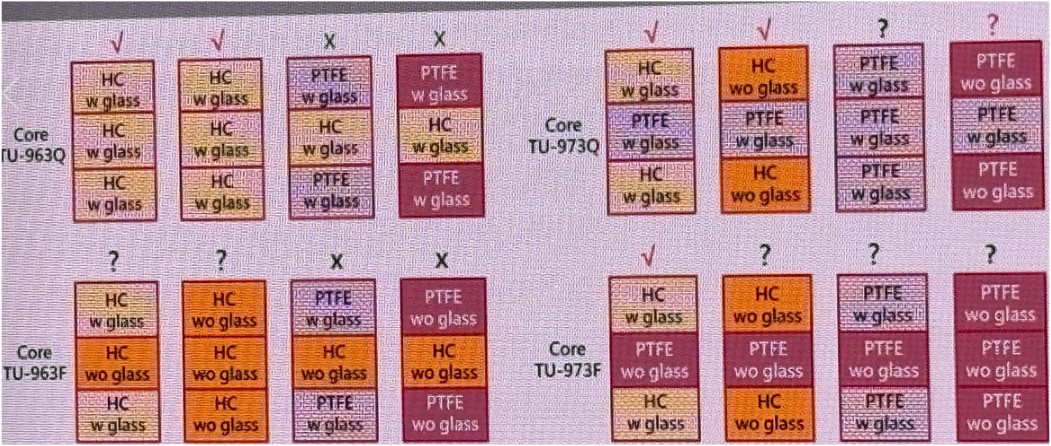
On technology development, companies in both substrate and CCL areas showed more diversified options to the roadmap ahead, including multi-layer core, glass/ceramic for substrates, and PTFE, hydrocarbon, Q-glass for CCL as we highlighted in (see report) the CCL industry report in early-October. On substrate side, there is continuous content increase of ~50% in each generation of server CPU/GPU, while suppliers also benefit from a bigger boost on pricing vs previous cycles (Exhibit 3). Further, we note SAP may be adopted in 3.2T optical module, creating a new TAM for substrate makers in longerterm. On CCL side, we learnt that 1) EMC's M10-grade CCL (mainly based on HC resin) will enter NPI in 1Q27 while its M11-grade solution (still based on Q-glass) is already in initial R&D stage; and 2) TUC expected the most feasible solution for advanced CCL so far would be CCL core with cloth, plus PP based on HC resin (Exhibit 7). Overall, we believe Q-glass cloth and HC resin seem to be a more suitable set of solutions, when it comes to upgrading CCL in near/mid-term. As for PCB names, our channel checks suggest there could be an ongoing price hike toward 4Q26-1Q27 driven by cost inflation.
Multi-layer core more feasible before glass core
According to the supply chain, multi-layer core substrate is needed to help with warpage control which could emanate from a couple of reasons (e.g. CTE mismatch, uneven copper balance, stack-up asymmetry), and it also enhances the mechanical drill ability and stiffness. Meanwhile, PI becomes more important given the embedded bridge and passive components, while signal integrity has been the focus for data-transmission (which is also supported by multi-layer core solution). Longer-term, glass core substrate seems to have more advantages including only one-third of warpage (vs organic core), lower CTE and higher Young's modulus (stiffness), while ceramic core substrate has the limitation in panel size. Yet, cracking points (SeWaRe) and reliability issues (given the CTE mismatch) remain the hurdles for glass core substrate to commercialize. To elaborate, cracking may not be seen after the panel goes through several processes (e.g. thermal cycle, movement, assembly), which creates a more severe trouble to the suppliers as it is already closer to the end-product level. According to AT&S, it believes the whole supply chain for glass core substrate remains distant from getting ready for mass production. Please refer to p.2 for the key takeaways on CCL/PCB sector.
This research report provides general information only. No part of this report may be used or reproduced or quoted in any manner whatsoever in Taiwan by the press or other persons without the express written consent of BofA Securities.
>> Employed by a non-US affiliate of BofAS and is not registered/qualified as a research analyst under the FINRA rules.
Refer to "Other Important Disclosures" for information on certain BofA Securities entities that take responsibility for the information herein in particular jurisdictions.
BofA Securities does and seeks to do business with issuers covered in its research reports. As a result, investors should be aware that the firm may have a conflict of interest that could affect the objectivity of this report. Investors should consider this report as only a single factor in making their investment decision.
Refer to important disclosures on page 11 to 15. Analyst Certification on page 9. Price
26 October 2026
Equity Taiwan Technology
Mike Yang >> Research Analyst Merrill Lynch (Taiwan) +886 2 2376 3729 mike.c.yang@bofa.com
Cathy Hsu >> Research Analyst Merrill Lynch (Taiwan) +886 2 2376 3726 cathy.hsu3@bofa.com
TPCA - Taiwan Printed Circuit Association
NYPCB - Nan Ya Printed Circuit Board
EMC - Elite Material
CCL - copper clad laminate
TUC - Taiwan Union
PTFE - polytetrafluorethylene
CPU/GPU - central/graphic processing unit
SAP - semi additive process
HC - hydrocarbon
LT- Long-term
TAM - total addressable market
NPI - new product introduction
R&D - research/development
PP - prepreg
CTE - coefficient of thermal expansion
PI - power integration
PTFE not feasible in L-T; equipment/drilling more critical
Judging from the performance upgrade and processibility in CCL/PCB, Q-glass based solutions seem to strike the balance at least in the near-term. Meanwhile, if hybrid solution is adopted, there may be a big gap in Dk performance by different materials. For longer-term, we also note that CCL suppliers appear to focus more on the low CTE metric vs previously when it comes to future product development, which makes us believe PTFE-based (with high CTE) CCL does not seem to be a long-term (L-T) solution. Further, PTFE-based CCL/PCB still has weaknesses in copper plating, hole drilling and lamination. On PCB side, we learnt that higher-end equipment and drilling suppliers in Japan (e.g. Via, Union Tool) and Taiwan (e.g. Ta Liang, Topoint) are shifting more focus to substrate-related demand, while Japanese suppliers are still less aggressive in capacity addition. In our view, this could lengthen the under-supply situation of high-end PCB/substrate. Further, we learnt from PCB/substrate suppliers that hole-drilling would become more critical in the next 1-2 years, given that 1) PCB layer count would move to 40-50; and 2) there would be more adoptions of multi-layer core substrates.
Exhibits related to TAM (total addressable market)
Exhibit 3: Substrate market CAGR by value and volume
ASP in substrate market is in an uptrend during 2020-30, contrary to the previous cycles
| Item/period | 2005-2010 | 2010-2015 | 2015-2020 | 2020-2030E |
|---|---|---|---|---|
| Value growth CAGR | 10.2% | -3.1% | 8.0% | 14.7% |
| Volume growth CAGR | 20.2% | 4.3% | 9.0% | 5.1% |
| ASP CAGR | -8.3% | -7.1% | -0.9% | 9.1% |
Source: BofA Global Research, Prismark
Exhibit 2: FC-BGA (flip chip BGA) substrate market size
FC-BGA substrate is expected to account for ~70% of substrate market size in 2030, vs ~50% in 2025
BofA GLOBAL RESEARCH
il
Exhibit 4: Market value trend by different type of PCB
Substrate and HDI are expected to record the highest growth among all the categories
| Manufacturing output value / M USD. | 2000 | 2020 | 2024 | 2025 | 2026F | 2030F | 2026F/ 2025 | 2025- 2030 CAGR |
|---|---|---|---|---|---|---|---|---|
| Commodity PCB | 10,324 | 7,911 | 7,947 | 8,440 | 9,587 | 11,716 | 13.6% | 6.8% |
| Multilayer | 22,217 | 24,763 | 27,994 | 33,405 | 45,522 | 64,166 | 36.3% | 13.9% |
| HDI | 2,074 | 9,874 | 12,518 | 16,197 | 22,641 | 34,004 | 39.8% | 16.0% |
| Package Substrate | 3,505 | 10,188 | 12,602 | 14,891 | 21,472 | 34,762 | 44.2% | 18.5% |
| Flexible PCB | 3,450 | 12,483 | 12,504 | 12,903 | 14,135 | 17,680 | 9.5% | 6.5% |
| Total | 41,570 | 65,219 | 73,565 | 85,836 | 113,357 | 162,329 | 32.1% | 13.6% |
Source: BofA Global Research, Prismark
Exhibit 5: Unit forecast of AI (artificial intelligence) accelerators in million
The number is expected to grow by 40+% in 2027, and it will reach ~28mn units
Source: BofA Global Research, Prismark
Exhibits related to the PCB/CCL specifications
Exhibit 6: Advanced CCL and PP (prepreg) solutions illustrated by TUC
PTFE-based solutions come up with best performance, but also has the disadvantage in mechanical strength, PCB drilling etc.
| Key Challenges | Core | PTFE w/o glass | PTFE w/o glass | PTFE with glass | PTFE with Glass | PTFE with glass | HC with Glass |
|---|---|---|---|---|---|---|---|
| in PCB applications | pp | PTFE w/o glass | HC with glass | PTFE with glass | HC w/o Glass | PTFE w/o glass | HC with Glass |
| Performance (ranking) | Performance (ranking) | 1 | 2 | 1 | 2 | 1 | 3 |
| CTE (ranking) X/Y/Z | CTE (ranking) X/Y/Z | 3 | 2 | 1 | 3 | 2 | 1 |
| Signal Skew effect @ High frequency | Signal Skew effect @ High frequency | 1 | 2 | 3 | 2 | 1 | 3 |
| Interfacial Bonding (Resin-Glass fiber) | Interfacial Bonding (Resin-Glass fiber) | N/A | N/A / Good | Weak / Weak | Weak / Good | Weak / N/A | Good / Good |
| Interfacial Bonding (Resin-Resin) core/pp | Interfacial Bonding (Resin-Resin) core/pp | Medium | Weak | Medium | Weak | Medium | Good |
| CAF risk | CAF risk | N/A | Low | Medium-High | Medium | Medium-High | Low |
| Warpage during PCB reflow process | Warpage during PCB reflow process | High | Medium-High | Low-Medium | Medium | Medium | Low |
| Mechanical Strength | Mechanical Strength | Weak | Medium | Weak-Medium | Medium | Weak-medium | Good |
| Adaptability to complicated Circuit Design | Adaptability to complicated Circuit Design | Weak | Medium-High | Weak | Medium | Weak | Good |
| Difficulty in Drilling Process | Difficulty in Drilling Process | Medium-High | Medium | Medium-High | Medium | Medium-High | Low |
| Difficulty in Desmear Process | Difficulty in Desmear Process | High | Medium | High | Medium | High | Low-Medium |
| Overall Weighting / Feasibility | Overall Weighting / Feasibility | X | X | ? | V | ? | V |
Source: BofA Global Research, company data
il
BofA GLOBAL RESEARCH
BofA GLOBAL RESEARCH
Exhibit 7: Comparison of feasibility by different pair of CCL and PP based on different materials
Hydrocarbon based PP and CCL with glass cloth are still more feasible solutions, vs PTFE-based PP and CCL without glass cloth
Source: BofA Global Research, company data
Exhibit 8: Comparison of EMC's EM896K3 vs next-generation CCL
A lower CTE and a much lower Df (<0.0004) is seen for next-generation CCL
| Item | EM-896K3 | Next generation |
|---|---|---|
| Tg (DMA; celcius degree) | 205 | 200 |
| XY-CTE (ppm/celcius) | 6/8 | 4/5 |
| Dk @ 10GHz | 2.72 | 2.66 |
| Df @ 10GHz | 0.00068 | 0.00038 |
Source: BofA Global Research, company data
Exhibit 9: Spec migration by Unimicron's advanced PCB solution
The interconnect pitch features greater density toward 2028
| Features/time | Features/time | 2024 | 2026 | 2028 |
|---|---|---|---|---|
| Capability of mSAP (um) | Line/space | 25/25 +/-5 | 18/22 +/-4 | 20/20 +/-4 |
| Tolerance Min. core thickness | 49 | 40 | 40 | |
| Structure (um) | Min. prepreg thickness | 25 | 22 | 22 |
| Min. blind via diameter | 60 | 50 | 50 | |
| Blind vias (um) | Min. blind via pad diameter | 90 | 90 | |
| 105 | 0.115 (RCC/mSAP) | 0.11 | ||
| Interconnect pitch (mm) | BGA/ball pitch | 0.13 (mSAP) | (RCC/mSAP) | |
| Solder resist (um) | Min. SR opening area Min. alignment | 75 +/-15 | 70 +/-12.5 | 70 +/-10 |
| Solder resist (um) | Min. SR web (BGA area) | 70 | 60 | 50 |
Source: BofA Global Research, company data
BofA GLOBAL RESEARCH
BofA GLOBAL RESEARCH
BofA GLOBAL RESEARCH
Exhibits related to the substrate specifications
Exhibit 10: Roadmap toward glass core substrate from organic substrate
Glass core substrate features more advanced performance, but will not become mainstream until 2030 at earliest
| Axis | 2026 | 2028 | 2030 |
|---|---|---|---|
| Substrate core | Organic, low-CTE | Organic + early glass core | Glass core mainstream for large body |
| Build-up line/space | 8/8 µm | 5/5 µm | 2/2 µm in fine tier |
| Die-to-die | Bridge / 2.5D interposer | Panel RDL at scale | Hybrid bonding at package level |
| SerDes rate | 112G PAM4 | 224G PAM4 | 224G + co-packaged optics |
| Package power | ~1,000 W | ~1,500 W | >2,000 W with vertical delivery |
| PCB dielectric | Ultra low loss | Extreme low loss | Hybrid low-loss + optical bypass |
Source: BofA Global Research
BofA GLOBAL RESEARCH
Exhibit 11: Comparison of different types of advanced substrate solutions
Both glass core and ceramic core substrates features certain advantages, but also come up with different limitations
| Property | Advanced low-CTE Organic core | Glass Core | Ceramic Core (HTCC Alumina) |
|---|---|---|---|
| Representative Material | Resin + Glass Cloth | Alkali-free glass | Al₂O₃ (96- 99.6%) |
| CTE (ppm/K) | 5~7 | 3~4 | 6.5~7.5 |
| Young's Modulus (GPa) | 35~37 | 70~90 | 280~330 |
| Thermal Conductivity (W/m·K) | 0.3~0.5 | 1~1.5 | 18~25 |
| Dielectric Constant (Dk) | 4.1~4.6 | 4~7 | 9~10 |
| Dissipation Factor (Df) | 0.005~0.011 | 0.001~0.01 | 0.0005~ 0.003 |
| Dimensional Stability | Moderate | High | Very High |
| Large Panel Capability | High | High | Limited |
| Technological Maturity | Very High | Low | Moderate |
Source: BofA Global Research
BofA GLOBAL RESEARCH
Exhibit 12: Comparison of metrics among glass core substrate based on different CTE
The solution that features low CTE and high stiffness also comes along with challenges (SeWaRE, reliability) that need to overcome
| Glass CTE | Warpage (After Assembly) | SeWaRe (After Singulation) | Reliability (T/S 1000cyc) |
|---|---|---|---|
| High CTE | High | No SeWaRe | Pass |
| Medium CTE | Middle | 10-2-10 | Pass |
| Low CTE | Low | 7-2-7 | Fail |
Source: BofA Global Research, company data
BofA GLOBAL RESEARCH
Exhibit 13: High-density ABF substrate roadmap by Shinko
The roadmap was introduced in 2024 with smaller bump pitch expected toward 2033
| Roadmap (in um) | 2024 | 2027 | 2030 | 2033 |
|---|---|---|---|---|
| Bump pitch | 55 | 35 | 30 | 25 |
| Land dia. | 21 | 21 | 17 | 13 |
| Via dia. | 10 | 10 | 7 | 5 |
| Position accuracy | ±5.5 | ±5.5 | ±5.0 | ±4.0 |
Source: BofA Global Research, company data
BofA GLOBAL RESEARCH
Exhibit 14: Spec migrations of Unimicron's substrate embedded with passive components
There is a trend of finer L/S (line/space) and lower Df toward 2028
| Time - Features (in um) - Structure - Max body size (mm) | Time - Features (in um) - Structure - Max body size (mm) | 2026 - Production - 10/2/10; 8/6/8 - 93x93 | 2026 - NPI - 18/2/18; 10/n/10 - 120x120 | 2027 - 14/n/14 - 120x150 | 2028 - 16/n/16 - 150x150 |
|---|---|---|---|---|---|
| Bump area | pitch | 110 | 90 | 85 | 80 |
| SRO | 50 | 45 | 45 | 40 | |
| Build up layer | line/space | 8/10 | 7/8 | 7/8 | 5/5 |
| Build up layer | Min. via/land diameter | 50/75 | 40/67 | 40/62 | 30/55 |
| Core layer | line/space | 25/25 | 20/25 | 20/25 | 20/25 |
| Highspeed dielectric loss tangent (under 10GHz) | Highspeed dielectric loss tangent (under 10GHz) | 0.0034 | 0.0022 | 0.002 | 0.002 |
Source: BofA Global Research, company data
Exhibit 15: Spec migrations of Unimicron's BGA (ball grid array) substrate
There is a trend of greater thickness, and finer line/space toward 2028
| Time | Time | 2026 | 2026 | 2027 | 2028 |
|---|---|---|---|---|---|
| Features (in um) | Features (in um) | Production | NPI | ||
| Structure | Structure | 9/6/2009 | 10/8/2010 | 14/n/14 | 16/n/16 |
| Max body size (mm) | Max body size (mm) | 110x110 | 120x150 | 230x150 | 230x230 |
| Thickness for core layer (mm) | Thickness for core layer (mm) | 3.2 | 4.5 | 4.7 | 5.1 |
| Bump area | pitch | 150 | 130 | 130 | 110 |
| SRO | 70 | 60 | 60 | 55 | |
| Build up layer | line/space | 14/14 | 12/12 | 12/12 | 9/12 |
| Min. via/land diameter | 60/85 | 50/75 | 45/70 | 40/65 | |
| Core layer | line/space | 75/75 | 70/70 | 65/65 | 60/60 |
| Highspeed dielectric loss tangent (under 10GHz) | Highspeed dielectric loss tangent (under 10GHz) | 0.0034 | 0.0034 | 0.0022 | 0.0022 |
Source: BofA Global Research, company data
BofA GLOBAL RESEARCH
BofA GLOBAL RESEARCH
Exhibits related to the products
Exhibit 16: Illustration of MPI's TS-3500DS probe station
The equipment features double-sided testing for silicon photonics
Source: BofA Global Research, company data
BofA GLOBAL RESEARCH
Exhibit 18: Illustration of Unimicron's optical module PCB
The product features mSAP technology with 40/30um line/space
Source: BofA Global Research, company data
il
Exhibit 17: Illustration of MPI's DTS650-DI equipment
The equipment supports bar/die/packaged type of testing
Source: BofA Global Research, company data
BofA GLOBAL RESEARCH
BofA GLOBAL RESEARCH
Exhibit 19: Stocks mentioned
Prices and ratings for stocks mentioned in the report
| BofA ticker | Ticker | Company name | Price (LC) | Rating |
|---|---|---|---|---|
| UMCRF | 3037 TT | Unimicron | NT$ 1085 | C-1-7 |
| NANYF | 8046 TT | NYPCB | NT$ 1265 | C-1-7 |
| KNSUF | 3189 TT | Kinsus | NT$ 986 | C-1-7 |
| ETMCF | 2383 TT | EMC | NT$ 5070 | C-1-7 |
Source: BofA Global Research, company data
Price objective basis & risk
Elite Material (ETMCF)
Our PO of NT$8,200 is based on 30x 2H27-1H28E P/E, at the mid-to-high-end of its historical range of 6-34x since 2016. In our view, the multiple is appropriate, given the market-share expansion in server/networking, where we see structural growth in addressable market.
Upside risks are (1) share gain at substrate CCL, (2) stronger 5G smartphone shipment, (3) greater 5G smartphone spec upgrades, and (4) favorable FX and raw material cost change.
Downside risks are (1) share loss at iPhone, (2) keener competition in high-end CCL, and (3) unfavorable FX and raw material cost change.
Kinsus (KNSUF)
We set our PO at NT$1,450 based on 35x 2H27-1H28E P/E, which is at mid-to-high-end level in its historical trading range (8-40x) since 2013. In our view, the multiple is backed by ROE and operating margin recovery to 36% and 25% in 2027-28E (vs 8% and 10% in 2025-26E).
Upside risks to our PO are (1) tighter ABF supply, (2) increasing adoption of SiP and AiP, (3) lower competition pressure and (4) slow development of alternative technology.
Downside risks are (1) greater ABF expansion from peers, (2) muted SiP/AiP adoption, (3) more severe competition, and (4) unfavorable technology development.
NYPCB (NANYF)
Our PO of NT$2,000 is based on 35x 2H27-1H28E P/E. We view this multiple as fair given ROE and operating margin expansion to 39% and 41% in 2027-28E (vs 13% and 14% in 2025-26E).
Upside risks to our PO are (1) tighter ABF supply, (2) higher SiP/AiP adoption, and (3) less intensified competition pressure in PCB business.
Downside risks are (1) greater ABF expansion from peers, (2) muted SiP/AiP adoption, and (3) more severe competition in PCB business.
Unimicron (UMCRF)
Our PO of NT$1,650 is based on 35x 2H27-1H28E, which is roughly 1 standard deviation above the historical average of 20x since 2017. In our view, the multiple is appropriate, as we expect Unimicron's earnings to be supported by its high-end technology offerings, where end market demand seems more resilient.
Upside risks are (1) tighter ABF supply, (2) greater PC and regular server demand, and (3)
BofA GLOBAL RESEARCH
il lower competition pressure.
Downside risks are (1) greater ABF expansion from peers, (2) lower ASP content increase at AI server, and (3) bigger drop in the demand of consumer electronic products.
圖片清單(已驗證 2026-10-27)
本報告無裝飾圖。
| 檔名 | 分類 | 親眼所見內容 |
|---|---|---|
| 報告_BofA_TPCA2026_20261026_001.png | 真資料圖(財務) | Exhibit 1:載板市場規模長條圖(US$bn,2018–2030E,2030E 約 40)與 YoY/CAGR 折線;2023 年約 -28%,2026E 約 +44%。 |
| 報告_BofA_TPCA2026_20261026_002.png | 真資料圖(財務) | FC-BGA 載板市場規模:2025 年占載板市場 52%、2030E 占 68%。 |
| 報告_BofA_TPCA2026_20261026_003.png | 真資料圖(財務) | AI 加速器出貨量長條圖(百萬顆,2023–2030E;無軸標題):2025 約 12、2026E 約 19.5、2027E 約 28、2030E 約 43。 |
| 報告_BofA_TPCA2026_20261026_004.png | 真資料圖 | 台燿(TUC)展場投影片翻拍:Core TU-963Q/TU-973Q/TU-963F/TU-973F 各搭配 3 層 PP 的 HC/PTFE、有/無玻纖組合,以 ✓、?、X 標示可行性;HC with glass 全部為 ✓,PTFE with glass 或 PTFE 無玻纖多為 X 或 ?。 |
| 報告_BofA_TPCA2026_20261026_005.png | 真資料圖 | MPI 自動晶圓雙面探測機台(TS3000-DS/TS3500-DS)照片,標示 Automatic - Wafer Double Sided,右下為晶片載台示意。 |
| 報告_BofA_TPCA2026_20261026_006.png | 真資料圖 | 欣興光模組 PCB 實物:一整片多連片黑色電路板,上段為含金手指與晶片焊墊區、下段含軟板區。 |
| 報告_BofA_TPCA2026_20261026_007.png | 真資料圖 | MPI DTS650-DI 測試機台外觀照片(含機械手臂、顯示器)。 |
| 報告_BofA_TPCA2026_20261026_008.png | 真資料圖(財務) | 台光電(ETMCF)BofA 目標價歷史圖;最新 PO NT$8,200(2026-07-29)。 |
| 報告_BofA_TPCA2026_20261026_009.png | 真資料圖(財務) | 景碩(KNSUF)BofA 目標價歷史圖;最新 PO NT$1,450(2026-10-10)。 |
| 報告_BofA_TPCA2026_20261026_010.png | 真資料圖(財務) | 南電(NANYF)BofA 目標價歷史圖;最新 PO NT$2,000(2026-10-01)。 |
| 報告_BofA_TPCA2026_20261026_011.png | 真資料圖(財務) | 欣興(UMCRF)BofA 目標價歷史圖;最新 PO NT$1,650(2026-10-10)。 |